



Transport accessories
ARG Bottling's conveyor auxiliaries are characterized by being strong, resistant, durable and with an excellent quality-price ratio.
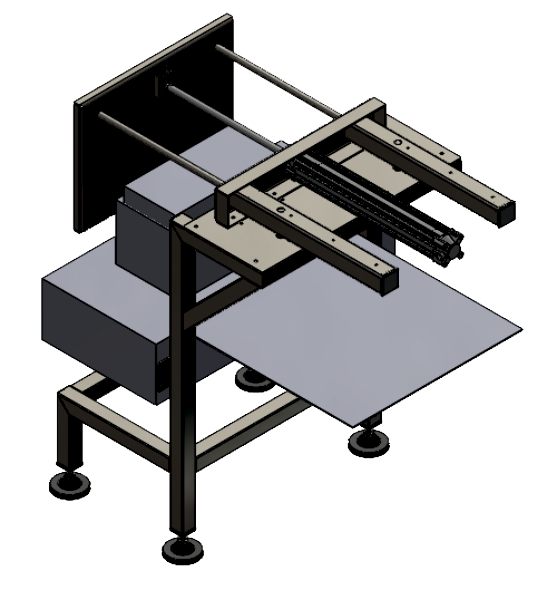
Product diverters
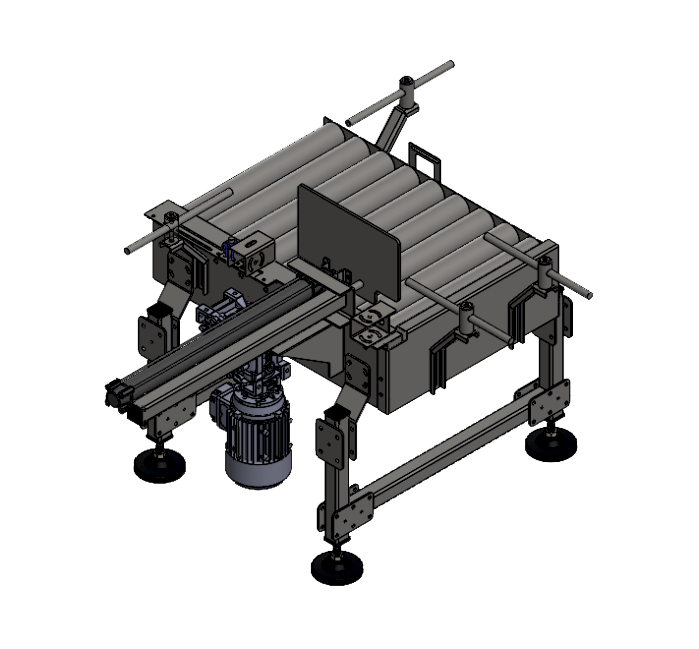
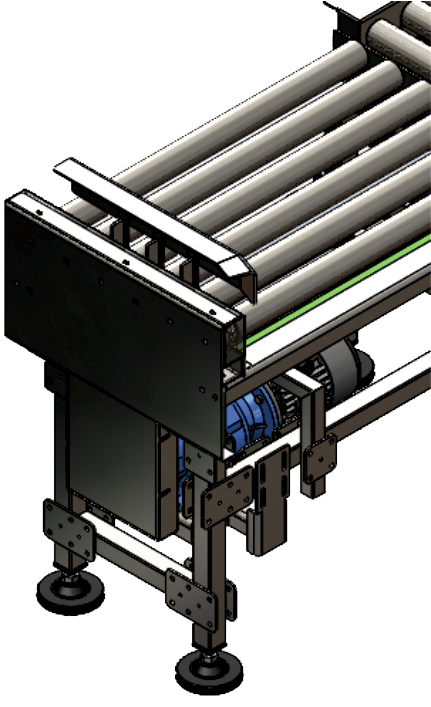
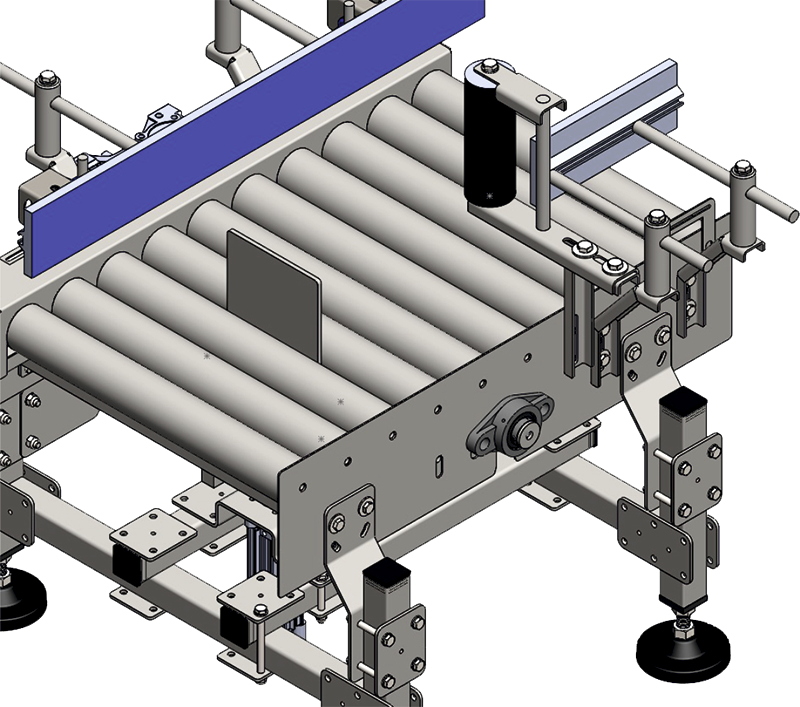
Box turners
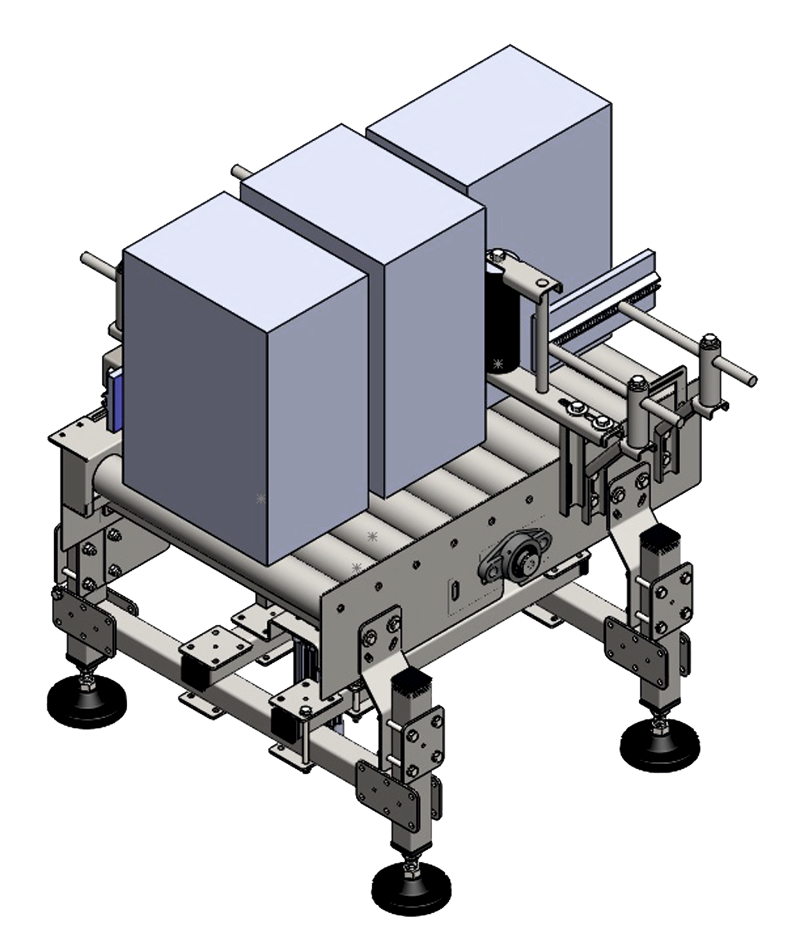
- It works by bringing the conveyed product into contact with the roller on one of its sides; as a result, the side that is not in contact with the roller keeps moving forward and the product turns.
- The product is not damaged thanks to the rubber-coated finish.
- Depending on the type of product and the line speed, it is usually installed together with a pneumatic system that acts as a flap and holds one product back while the previous one is turning.
- These turners are ideal for boxes.
Star braking system
Glass crusher
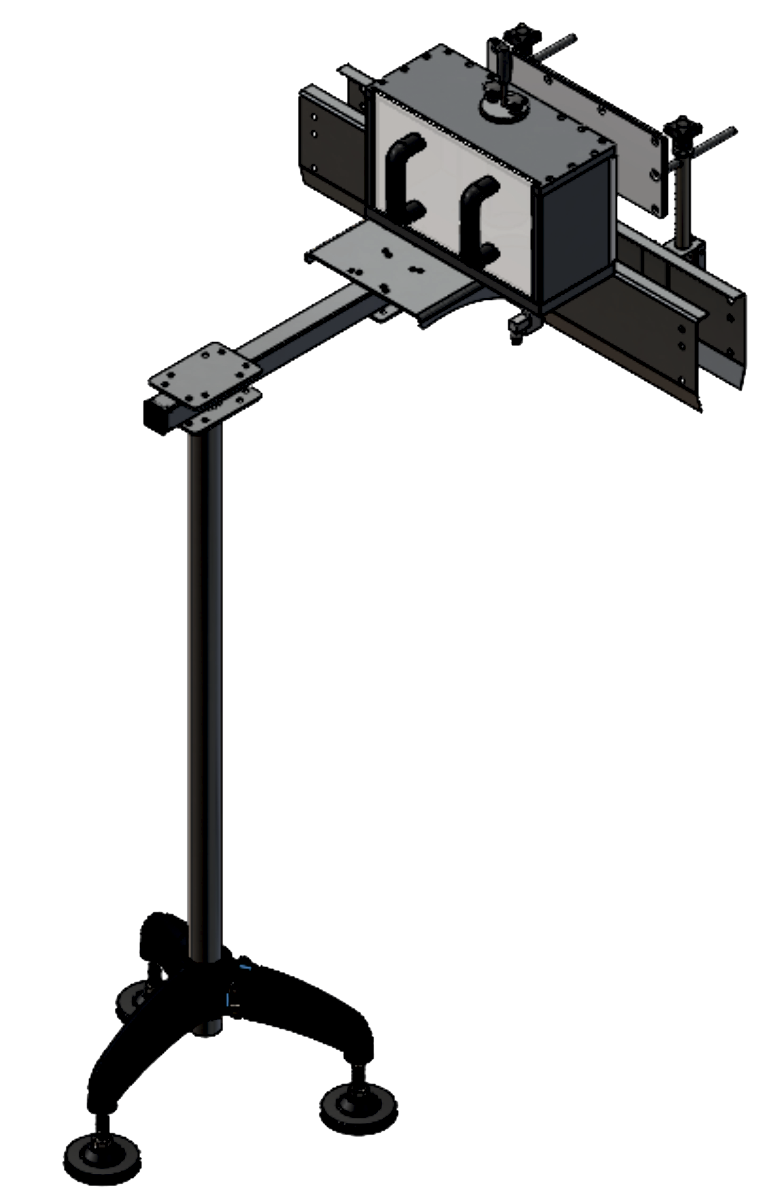
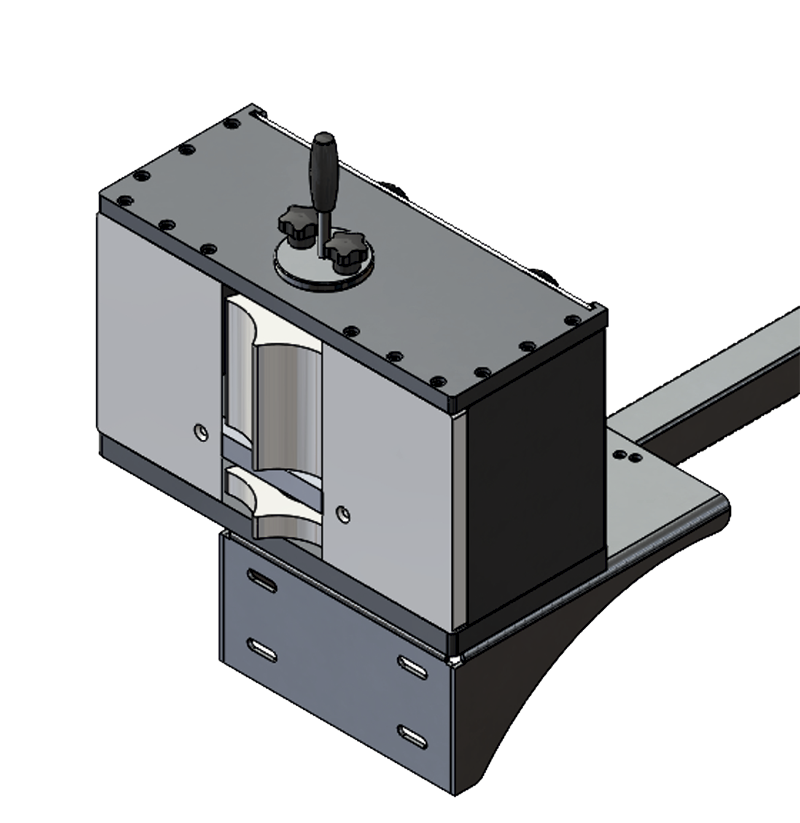
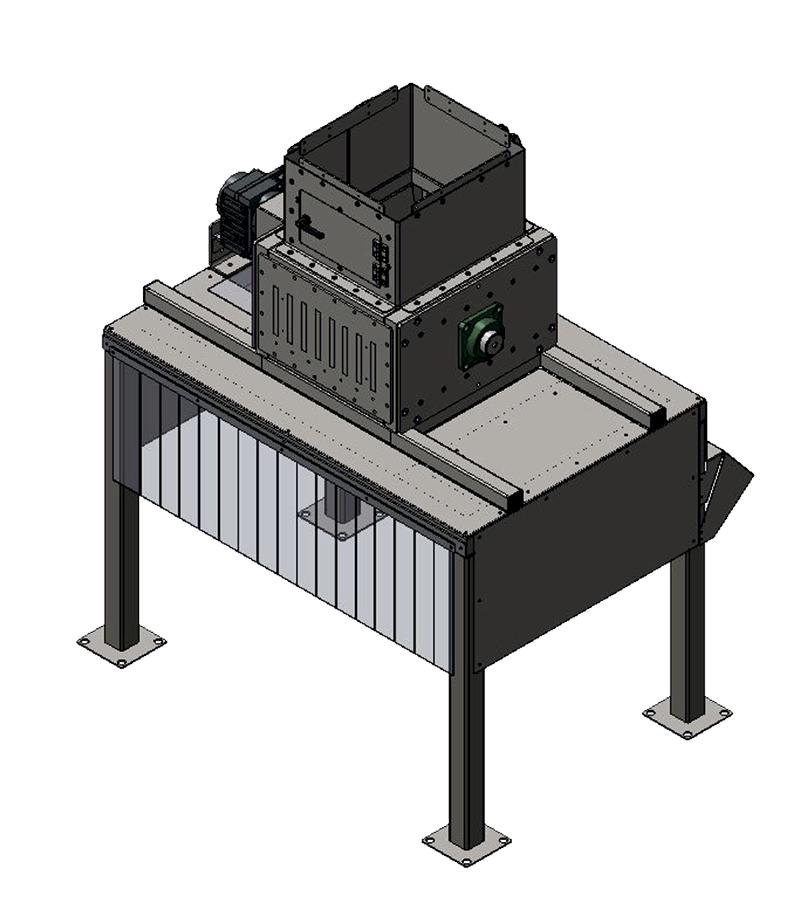
- Glass bottles enter through the top and the crushed glass is discharged from the bottom into a container.
- The crushed glass discharge area is fitted with plastic guards that prevent material from being projected outwards.
- Inside there are a total of 7 teeth that crush the glass. The teeth are accompanied by a structure that prevents bottles from falling through without being crushed.
- The teeth are driven by a helical bevel geared motor.
- The machine has doors for ease of maintenance, which cannot be opened while the machine is running.
- The crusher is installed on a structure anchored to the floor.
Drying station
Effectively removes surface moisture from containers before labelling or other downstream operations, guaranteeing a high-quality finish and optimal line performance.
Progressive rejection
Designed to remove non-conforming containers from the production line precisely and under control, avoiding impacts and safeguarding the integrity of the remaining products. Its dynamic operation allows it to adapt to different formats and production speeds.
Bridge type lifting system
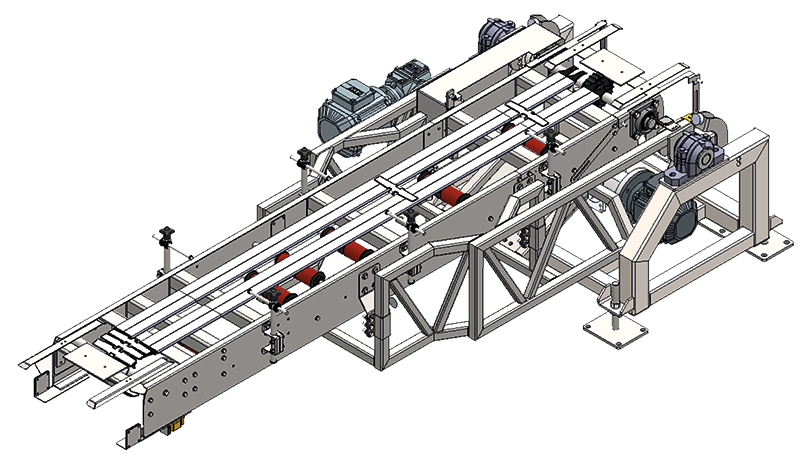
Pallet destacker and stacker
- Structure made from painted carbon steel structural profiles, sheet and machined parts.
- This pallet lifter travels along two axes, both horizontal and vertical.
- It works by moving horizontally when a pallet is positioned on the preceding conveyor in order to pick it up. Once this is done, it moves vertically with the pallet.
- The forks that hold the pallet use the ISO mounting defined in the ISO 2328 standard.
- Movement is driven by two helical bevel motors, one for horizontal travel and one for vertical travel.
- Motion is transmitted by roller chain in accordance with DIN 8187.
- It is recommended that the conveyor next to the lifter be installed together with an integrated pallet stop.
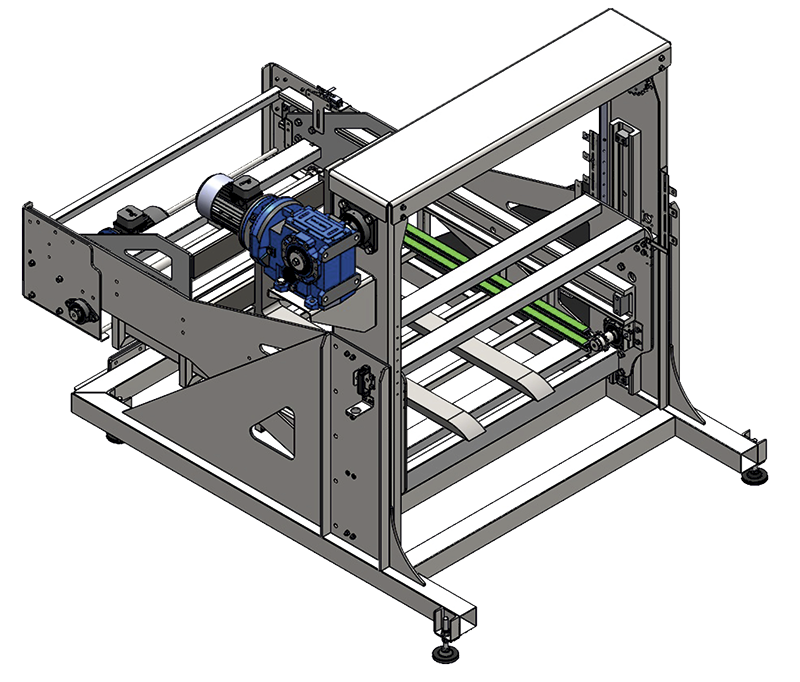
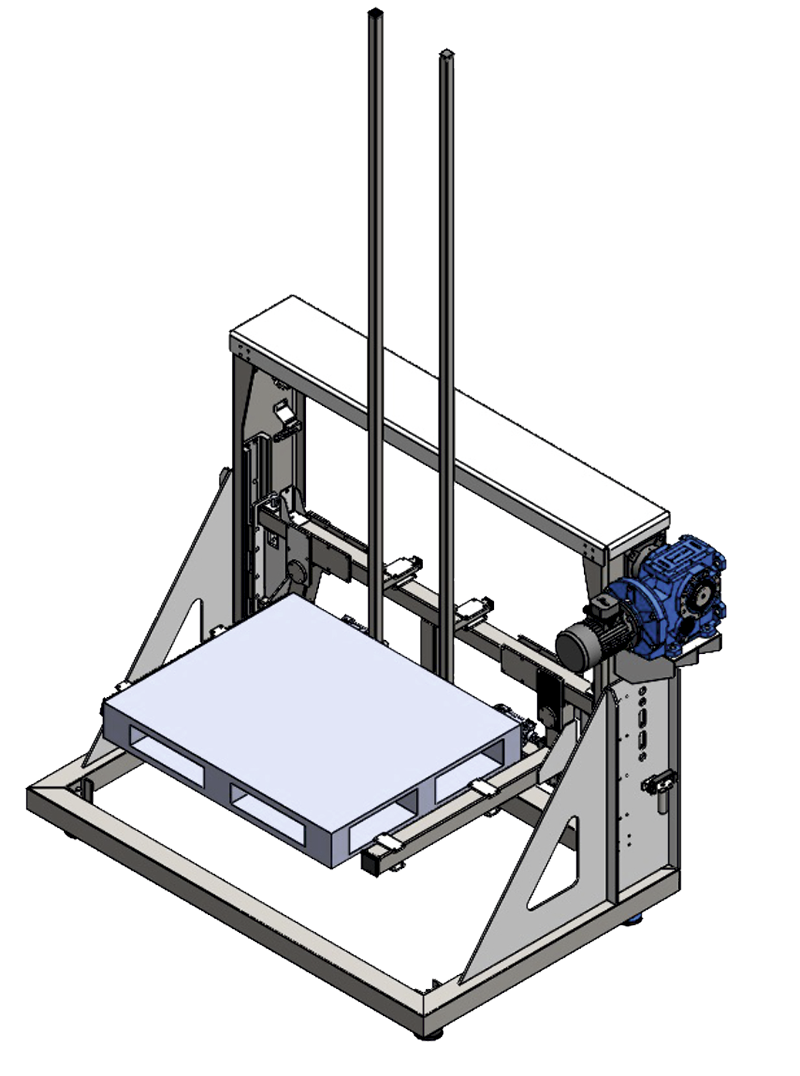
Shuttle
- Structure made from painted carbon steel structural profiles, sheet and machined parts, supporting the driven roller bed made from ST-37 ZN carbon steel.
- It is fitted with 4 wheels that guide and move the shuttle along the rails.
- It works by having the pallet enter the shuttle via the roller bed, which stops with the pallet on top. The shuttle then travels along the rails to its destination. Once it completes its run, the carriage stops and the roller bed is activated again, moving the pallet off the carriage.
- It has two worm geared motors: one for moving the rollers and one for turning the wheels.
- Motion is transmitted by roller chain in accordance with DIN 8187.
- The rails can be installed recessed into the floor or above it, anchored to the floor.
- For the wiring, a structural profile frame is installed for the cable chain to slide along.
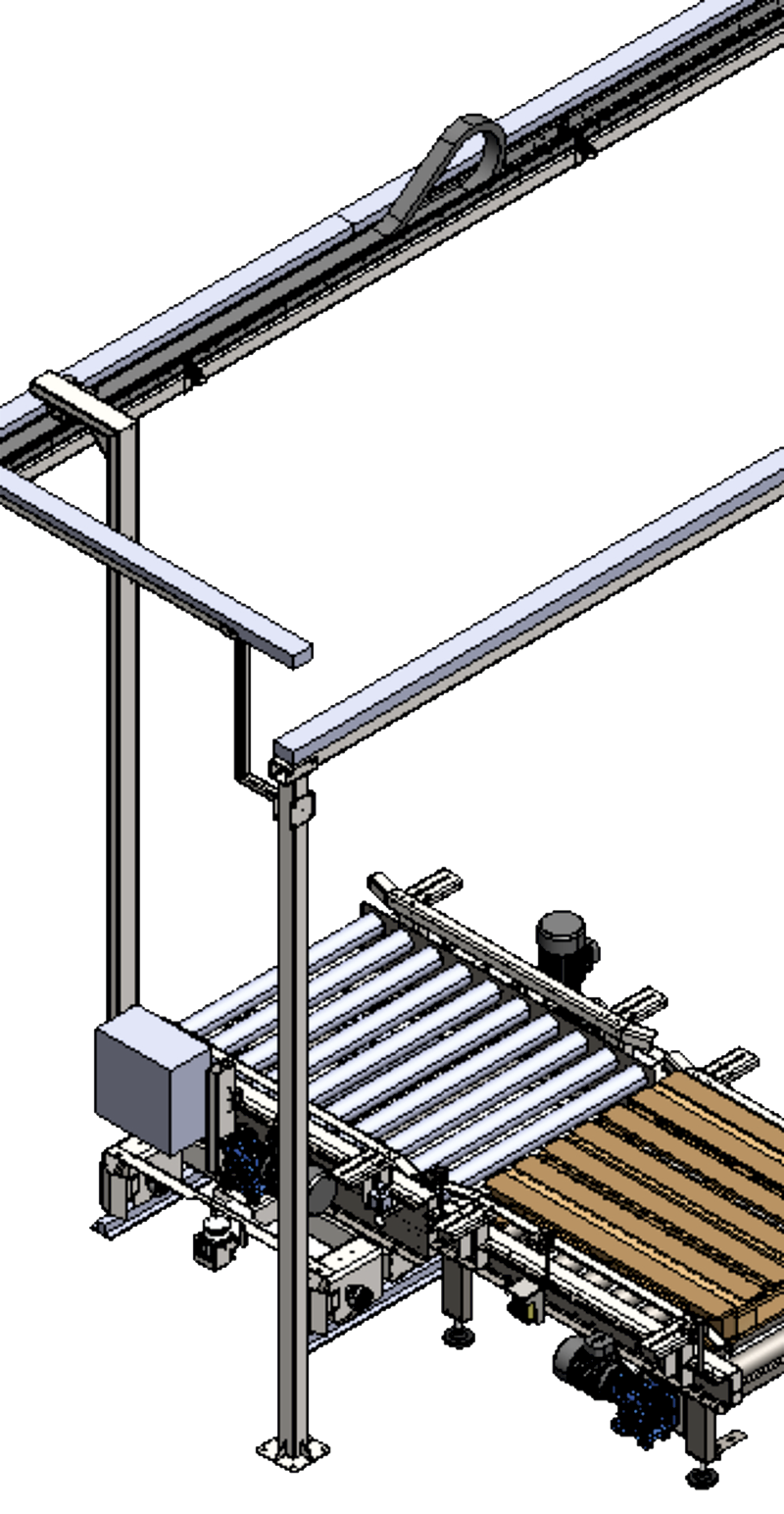
Buffer / AQUDUO
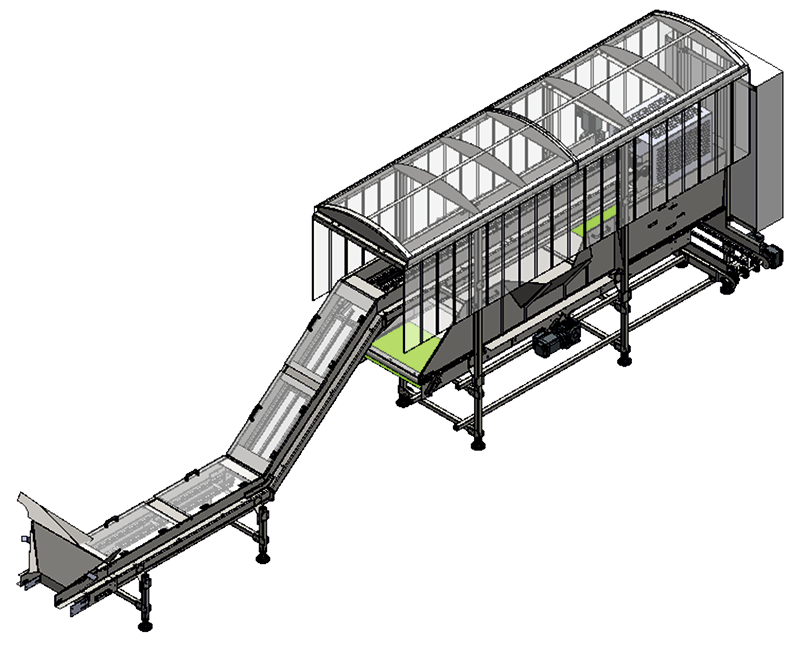
- It works by having the product arrive on the infeed conveyor; if no accumulation is required, the product passes on to the outfeed conveyor. If accumulation is required, the pneumatic system is activated and acts as a flap, causing the product to fall inside the buffer and accumulate until it is needed.
- The buffer infeed and outfeed conveyors are adjusted to suit each project.
- The buffer conveyor is of the bidirectional belt type.
- It has one geared motor to drive the belt conveyor, plus the geared motors for the infeed and outfeed conveyors.
- The buffer is protected around its entire perimeter with PVC strips and a polycarbonate roof. The belt conveyor is protected at the sides by AISI 304 stainless steel guards, with doors for ease of maintenance.
Aligner
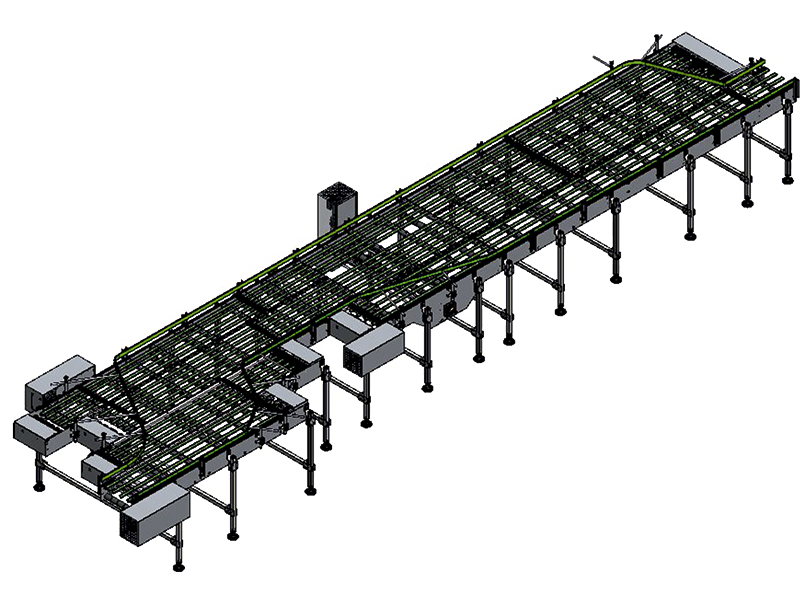
- Structure made from AISI 304 stainless steel sheet and machined parts, acetal chain and high-performance reinforced polyamide components.
- Support frame made from stainless steel structural profile with feet joined to the sides of the conveyor, allowing levelling and height adjustment.
- It has 3 geared motors to drive the lanes.
- The aligner outfeed has a tray to collect any fallen product.
- In addition to the adjustable guide rails required for its function, there is the option of fitting guide rails on the outer side.
- Motor covers can be included for the geared motors.
FIFO (First In First Out)
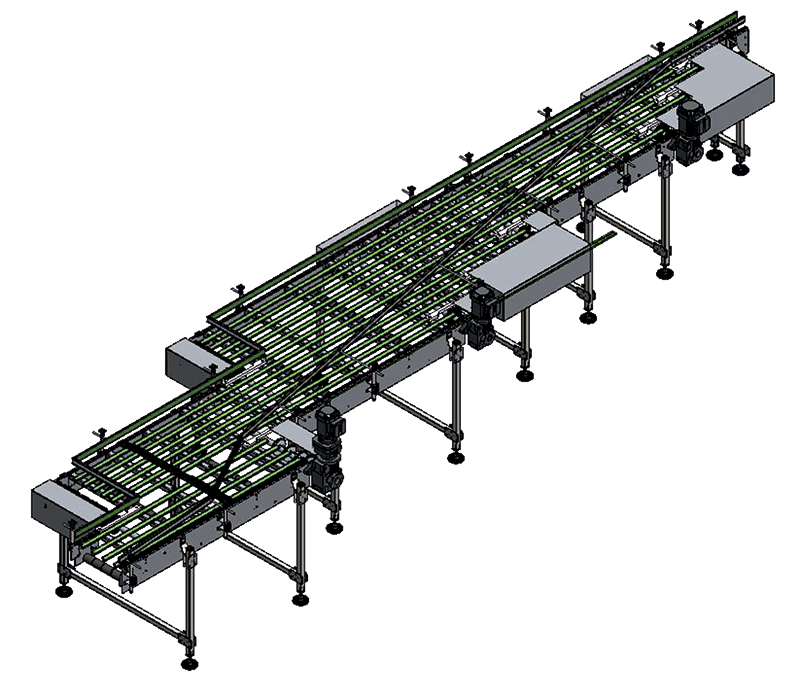
- Its main structure consists of a multi-lane modular mesh chain table and a movable guide rail that travels horizontally across the table and also rotates on it in order to move the product along.
- Its purpose is to cool the product that enters the table hot. To do so, the conveyor and guide rail speeds are set according to the time the product needs to cool down, and the travel path is adjusted for each format so that the first product in is the first product out and every can is held for the same cooling time.
- Support frame made from stainless steel structural profile with feet joined to the sides of the conveyor, allowing levelling and height adjustment.
- The FIFO is surrounded by perimeter guarding made from AISI 304 stainless steel sheet, polycarbonate hinged doors for ease of maintenance, and motor covers.
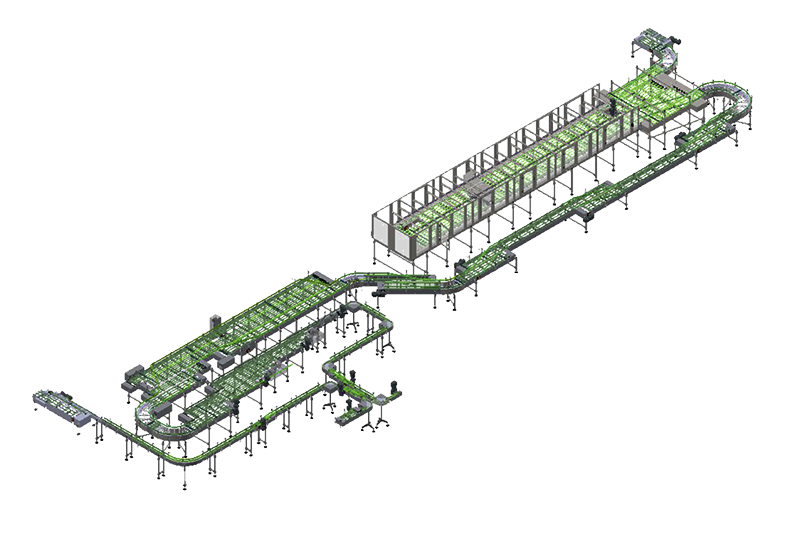
Dynamic accumulation table
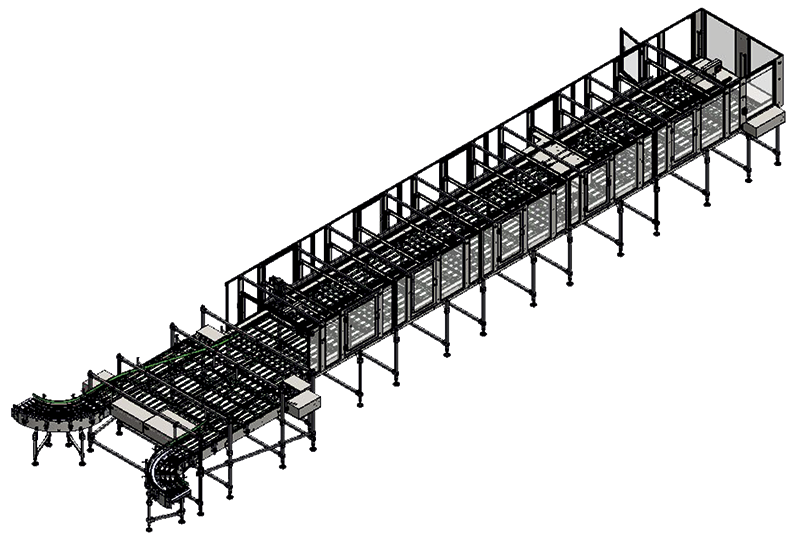
Used to accumulate containers that must maintain a given position during the production process, ensuring an orderly, continuous flow between the different stages of the line. Its design adapts to different container formats.